Basil-Buttered Salmon: A Simple, Elegant Seafood Dish

October 30, 2018 by Deborah Penner


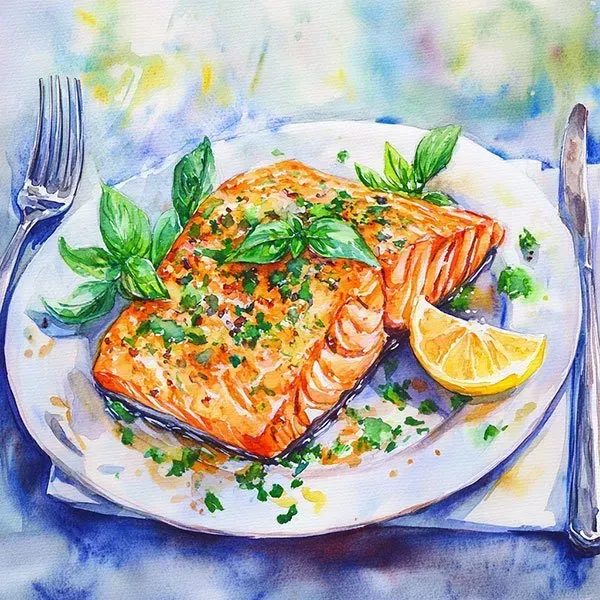
Salmon is one of the easiest proteins to prepare, yet it always feels like a special occasion meal. With its rich, buttery texture and incredible nutrient profile, it’s a staple for those looking to support heart health, brain function, and overall wellness. This basil-buttered salmon is a foolproof way to enjoy fresh fish with a bright, herbaceous twist.


The key to this recipe is the combination of fresh herbs and citrus zest, which complement the natural flavors of the fish. The lemon-pepper seasoning enhances the dish without overpowering it, while the butter mixture melts over the warm fillets, infusing every bite with aromatic basil and parsley.


This dish is quick to prepare and broils to perfection in under 15 minutes. Serve it alongside roasted vegetables, a fresh green salad, or a light quinoa pilaf for a satisfying meal.

Ingredients

  • 4 fresh or frozen skinless salmon, halibut, or sea bass fillets (about 1 1/4 pounds)
  • 1/2 tsp salt-free lemon-pepper seasoning
  • 2 Tbsp butter, softened
  • 1 tsp snipped fresh lemon basil, regular basil, or dill (or 1/4 tsp dried basil or dill, crushed)
  • 1 tsp snipped fresh parsley or cilantro
  • 1/4 tsp finely shredded lemon or lime peel

Instructions

  1. If using frozen fish, thaw completely, then rinse and pat dry with paper towels.
  2. Sprinkle the fillets with lemon-pepper seasoning.
  3. Place the fish on a greased, unheated broiler pan rack, tucking any thin portions under for even cooking.
  4. Broil 4 inches from the heat for 5 minutes. Carefully turn the fish over and continue broiling for another 3 to 7 minutes, or until the fish flakes easily with a fork.
  5. While the fish is broiling, mix the butter, basil, parsley, and lemon peel in a small bowl.
  6. Once the fish is done, top each fillet with a teaspoon of the herb butter. Serve immediately, allowing the butter to melt over the warm fish.

This basil-buttered salmon is a fresh, flavorful meal that comes together in no time. Try it with a squeeze of extra lemon juice before serving for even more brightness. Enjoy!

Watercolor-style cows grazing in a green pasture under a bright sky
By Deborah Penner June 25, 2025
March 25, 2025 by Deborah Penner In a world full of modern seed oils and synthetic skincare products, tallow is making a comeback—and for good reason. In his latest article, Dr. Robert Malone explores this time-honored fat that has nourished and supported humans for generations. From its dense nutritional profile to its unique benefits for the skin, tallow stands out as a versatile, shelf-stable, and highly bioavailable source of essential fatty acids, fat-soluble vitamins (A, D, E, K2, and B12), and anti-inflammatory compounds like conjugated linoleic acid (CLA). Dr. Malone breaks down what tallow is, how it’s rendered, and why sourcing it from grass-fed animals matters. He covers its historical culinary use, superior storage potential, and modern skincare advantages. He also shares how to make tallow at home, along with tips for storage, sourcing, and practical applications—even including a nod to traditional meat drippings. If you’re interested in ancestral nutrition, reducing toxic exposures, or reclaiming sustainable practices in your home and kitchen, this article is a must-read.  Read the full article on Robert Malone’s website to explore the health benefits, uses, and how-to of tallow.
Plated roasted lamb chop with herbs, berries, and lemon slices on a white dish
By Deborah Penner March 20, 2025
March 20, 2025 by Deborah Penner If you’re looking for a powerful way to support metabolism, joint health, and overall vitality—without reaching for another supplement—consider this often-overlooked cut of meat: the shank. In a recent article on Mercola, Ashley Armstrong highlights why shanks (from beef, pork, or lamb) may actually outperform steaks when it comes to nutrient density and health benefits. Rich in collagen and connective tissue, shanks offer a more balanced amino acid profile than typical muscle meats. When cooked low and slow, they yield gelatin—a form of collagen that’s easier for the body to absorb. This provides crucial support for the skin, joints, bones, and gut, while also boosting metabolic health through glycine, a key amino acid that helps regulate inflammation and energy production. Armstrong also explores the wisdom of traditional diets, which prioritized nose-to-tail eating and naturally included more collagen-rich foods. Today’s steak-heavy habits miss out on these benefits, making shanks an easy and affordable way to restore that balance. The article includes 15 time-tested recipes from around the world, and a video walking through Armstrong’s favorite braising method.
Silhouetted figure facing a vivid watercolor sky with a cell tower and power lines at sunset
By Deborah Penner March 17, 2025
March 17, 2025 by Deborah Penner Electromagnetic fields (EMF) and 5G technology have rapidly expanded across the globe with little consideration for their long-term impact on human health and the environment. Dr. Mark Trozzi, a dedicated physician and researcher, explores the hidden dangers of EMF exposure and the heightened risks that come with 5G. He reveals how governmental agencies, despite being informed of the concerns, have remained powerless in the face of telecom industry influence. Even before the rollout of 5G, studies linked EMF exposure to a range of serious health issues, including cancer, infertility, neurological disorders, and cardiovascular disease. Dr. Trozzi highlights that 5G takes these risks further with the use of higher frequencies, such as 60 GHz, which directly interact with oxygen molecules and could disrupt their ability to bind with hemoglobin. He also sheds light on the military origins of some 5G frequencies and the aggressive destruction of trees to facilitate stronger signals—an alarming environmental consequence. Through his research, Dr. Trozzi underscores the urgent need to recognize EMF radiation as a major public health threat. He calls for awareness, education, and practical steps to mitigate exposure, drawing attention to the work of leading experts like Dr. Devra Davis and Dr. Arthur Firstenberg. To learn more about the critical health risks of 5G and EMF exposure, read the full article and watch the video at drtrozzi.news .
Person crouching in a grassy field beside a vivid blue, orange, and pink fire-like landscape
By Deborah Penner March 11, 2025
March 11, 2025 by Deborah Penner Wildfire smoke exposure has profound health consequences, yet its impact on chronic illness remains widely overlooked. A Midwestern Doctor explores the link between particulate matter inhalation and conditions such as cardiovascular disease, lung disease, and cognitive decline, emphasizing the role of glutathione in protecting lung tissue. The article highlights the lessons learned from wildfire-related illnesses, particularly how exposure worsens pre-existing inflammatory conditions and contributes to long-term health deterioration. It also sheds light on the parallels between wildfire toxicity and other environmental exposures, such as pollution and pharmaceuticals, that can push individuals past their body’s threshold for chronic illness. One of the most promising solutions discussed is nebulized glutathione, which replenishes the lungs’ natural defense system, helping mitigate damage from smoke inhalation and potentially offering relief for those suffering from COPD. Additionally, the therapeutic potential of DMSO in respiratory conditions is examined, alongside other integrative approaches for addressing the systemic effects of wildfire exposure. To understand how wildfire illness can reshape our approach to lung health and chronic disease, read the full article by A Midwestern Doctor on The Forgotten Side of Medicine .
By Deborah Penner March 8, 2025
Key Takeaways from the Interview
By Deborah Penner February 24, 2025
Certain substances, such as aluminum, are known to reduce zeta potential, increasing the likelihood of sluggish blood flow and microcirculatory issues. On the other hand, practices like optimizing mineral intake, reducing toxin exposure, and supporting kidney function can help restore and maintain a healthy zeta potential . For a deeper dive into how zeta potential affects overall health and what can be done to support it, read the full article on Unbekoming Substack .